

In wake of major project proposals, Sherburne proposes battery storage law
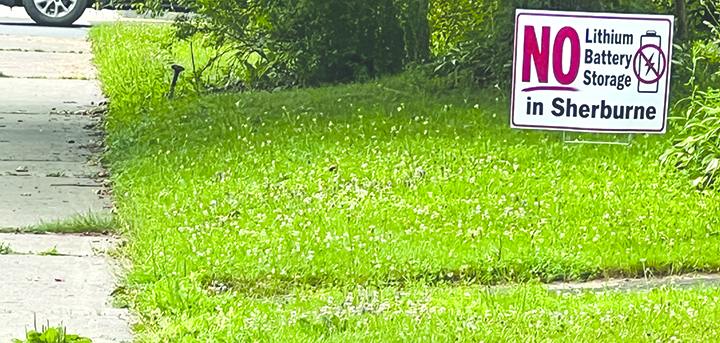
Many residents from Sherburne have spoken out in opposition to NexAmp’s proposed battery storage project. More than 700 signatures have been collected on petitions in opposition to the project. (Submitted photo)
SHERBURNE – The Town of Sherburne has been working to create a battery storage law that would regulate potentially hazardous battery storage facilities within town limits.
After passing two moratoriums on battery storage sites, the law is now ready and will be presented to the public at 6 p.m. on Wednesday, September 9 at the Sherburne Fire House.
Late last year, the clean energy company NexAmp approached the Sherburne Town Board with a proposal to locate a 40-megawatt battery storage facility on Knapp Road in the Town of Sherburne.
The facility would be larger than any that the company currently has in operation. Residents and town officials have been questioning the safety of such sites since then.
After months of work by the board and Sherburne Town Attorney Dylan Harris, the law has been completed and will be presented and could be adopted at the September 9 board meeting.
According to the public notice published by the town, “The proposed law would establish regulations for the installation and use of battery energy storage systems to […] ensure compatible land uses in the areas affected by such systems; mitigate the impacts of such systems on various environmental resources; and create synergy between the siting of such systems and the goals of the Town’s Comprehensive Plan.”
Town Supervisor Charles Mastro explained some of the law’s major components. One component would create a ban on the use of lithium ion batteries at such facilities.
“It’s to protect the safety of the Sherburne residents,” Mastro explained. “There are safer alternatives.”
Several residents and Sherburne Fire Department officials have expressed concerns over the companies plan to use lithium ion batteries, pointing to fires at other battery facilities.
Lithium ion batteries are known to create their own oxygen source as they burn, making the fires almost impossible for fire departments to extinguish. Often the fires have to be allowed to burn themselves out and fire department members have questioned the safety of the gasses released as the batteries burn.
Another major component of the law addresses site access. In July officials from NexAmp attended a town meeting and addressed questions from the public. They stated that they would have a NexAmp official on site at the battery storage facility every three to four months. The proposed law would require that a trained official be on site 24-hours a day to monitor operations.
The town would also require the battery storage company to train at least 75 percent of the Sherburne Fire Department in how to respond to emergencies involving the battery systems.
The law also dictates the size of such facilities. The Sherburne law sstates that battery storage facilities cannot exceed 1-megawatt, which according to Mastro would generate enough electricity to power 750 homes. NexAmp’s proposed project is a 40-megawatt facility.
“This is the largest proposed battery storage site in the state,” Mastro said. NexAmp has stated that they have plans to build other facilities as large or larger than the one they hope to build in Sherburne, but they do not currently have any of that size in operation in New York.
Many residents from Sherburne have spoken out in opposition to the project, especially those who live on Knapp Road. More than 700 signatures have been collected on petitions in opposition to the project.
“Our goal is to get the information out to the public,” Mastro said. The town board will listen to the public’s input at the public hearing and if no major concerns are noted, the law will be adopted at the regular town meeting beginning at 7 p.m. on the same night.
Mastro explained that even once the law has been passed, there is still a possibility that the state will step in and could potentially override any local laws. However, if that happens, the matter would be decided in court. In 2022, Governor Kathy Hochul doubled New York’s energy storage goal, calling for 6-gigawatts of energy storage by 2030, making it the highest energy storage goal in the country. Projects like NexAmp’s proposed battery storage facility would be progress toward that goal.
Mastro said full copies of the proposed law will be available at the public hearing on September 9.
(CORRECTION: an earlier version of this article incorrectly stated the day of the meeting as "Monday, Sept. 9" the meeting is on "Wednesday Sept. 9.")



Comments