

The Chenango Bird Club presents “The Wonders of It All”

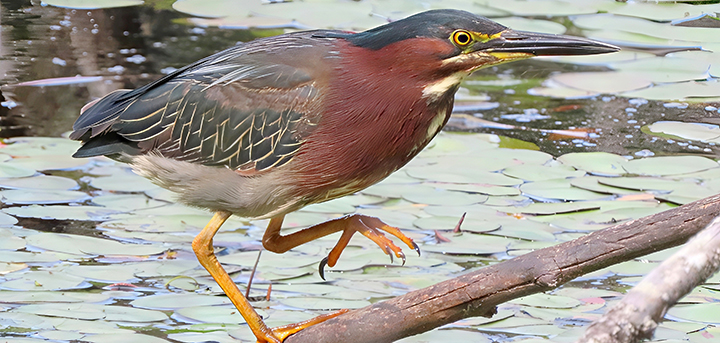
The small, dark heron with chestnut neck and black crown of feathers will be among the many photos featured during the program at the Chenango Bird Club meeting held at 6:30 p.m., Wednesday, November 11th, at the Rogers Environmental Education Center, located at 2721 State Rt. 80 in Sherburne. (Photo by Rick Bunting)
SHERBURNE – The Chenango Bird Club invites the community to its monthly meeting at 6:30 p.m. Wednesday, November 11, at the Rogers Environmental Education Center, located at 2721 State Route 80 in Sherburne.
Naturalist Rick Bunting will showcase his photography and lead a storytelling presentation titled “The Wonders of It All” following a brief business meeting.
"If you have never had the pleasure to see one of Rick's presentations, you will not be disappointed," said Dan Pfeifer, Chenango Bird Club communications chair.
"His photography, accompanying descriptions and stories are top notch," Pfeifer said. "He enjoys taking photos and sharing them whenever he can."
Bunting's photograph of a small, dark heron with a chestnut neck and black crown of feathers will be among the many photos featured during the program.
"The Green Heron is a very attractive and an interesting bird," said Bunting.
"In this program, we will be looking at the ways they hunt, and the skills required to do so," he added.
According to audubon.org, the green heron is between 16 and 22 inches long, about the size of a crow, with orange legs and a dark back glossed with green or blue. The feathered crown often rises in a bushy crest.
A young heron is duller and browner in color, with a striped neck.
The green heron can be found in lakes, ponds, marshes, swamps and along streams, but is most commonly found around small bodies of fresh water lined with trees, shrubs or tall marsh vegetation.
Green herons have one or two broods per year, and both parents feed their young even after their first flight at around 21 to 23 days old, continuing to do so for a few more weeks.
Bunting said his interest in observing the natural world began early in his life when his parents rented a camp on the Hudson River outside of Kingston, New York, where he grew up.
"Our home was right in the middle of the city, so it was during those years at the camp where the pleasure of being with the natural world was realized," Bunting added.
He noted that a career in music and education, along with marriage and a family that followed, consumed most of his time for about 40 years, until he retired and was blessed with time to pursue his interest in the natural world.
"I look forward to sharing some of the wonders of that world I have been priveleged to observe and photograph in this program," he said.
Pfeifer noted that Bunting is a professor emeritus at the Crane School of Music at SUNY Potsdam, where he served as chair of music education and conducted the renowned Crane Chorus.
Before his work at Potsdam, he taught at the Bainbridge-Guilford Central School, SUNY Fredonia and Jacksonville University. He continues his musical endeavors as a guest conductor and member of the Susquehanna String Band.
Questions can be emailed to Loretta Brady at [email protected].




Comments