

Local concerns over homelessness reflect much larger housing and mental welfare challenges say officials
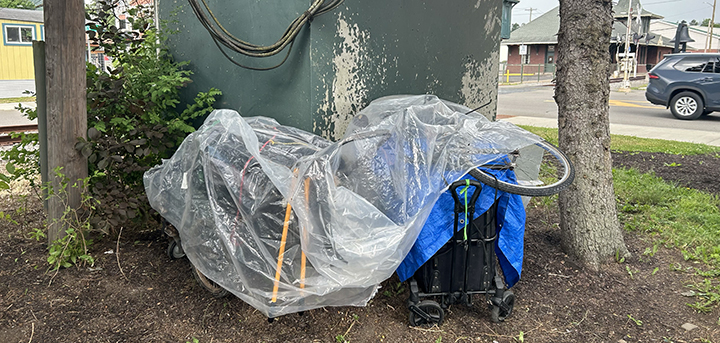
A cart near a treatment facility in the Norwich this summer. Local officials say housing shortages, financial hardship and other challenges contribute to homelessness across Chenango County. (Photo by Tyler Murphy)
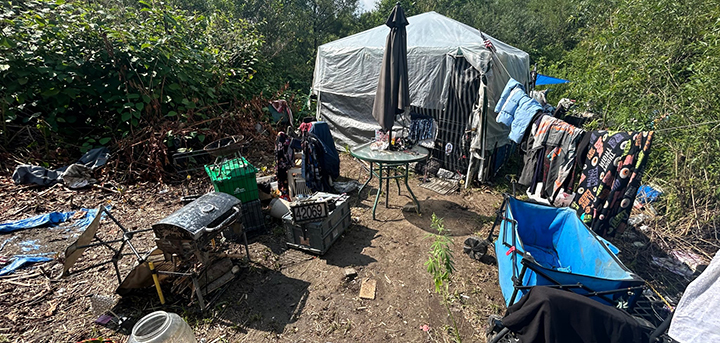
NORWICH - Concerns surrounding homeless encampments in the Norwich area have sparked conversations among law enforcement, social service providers, and residents about the broader causes of homelessness and the challenges of helping those experiencing it.
While Chenango County Sheriff Ernest Cutting and Chenango County Department of Social Services Commissioner Daniel Auwarter approach the issue from different perspectives, both agree that homelessness is not unique to Norwich and reflects larger social issues affecting communities across New York and the nation.
"This isn't just a Norwich problem. This is all over," Cutting said.
Cutting said deputies regularly respond to complaints about encampments, speak with individuals living there and attempt to connect them with services. He said many of the people law enforcement encounters struggle with substance abuse and often decline offers of assistance.
"It's a terrible disease and it's unfortunate. We try to do the best we can to address it. We try to get them help. Everybody has compassion. They want to help. Again, these are people's husbands, wives, daughters, relatives,” Cutting said.
He added that law enforcement works closely with social service agencies and community partners to offer assistance whenever possible.
Auwarter said substance abuse can be a contributing factor to homelessness, but cautioned against viewing it as the sole cause.
"I would never say that substance abuse isn't a factor in many cases, but it's not exclusive," he said.
According to Auwarter, homelessness has increased in Chenango County over the past decade, reflecting trends seen in communities across the country.
He cited housing shortages, financial hardships, mental health concerns, and substance abuse as some of the factors contributing to housing instability.
"Chenango County is dealing with some of the same issues that every place is dealing with. We have economic pressures and housing shortages, just like many places have,” he said.
Auwater also noted that not everyone experiencing homelessness struggles with substance abuse.
"We work with homeless people at my department that do not use substances," he said. "They are dealing with other things, but substance abuse is not one of their problems."
While some individuals refuse services, Auwarter said the reasons are often complex and can include mental health challenges, personal circumstances and difficulties navigating government assistance programs.
"There are many people that just cannot or will not navigate the bureaucratic systems that are put forth," he said.
Although residents' concerns about encampments are understandable, Auwarter said the issue should be viewed from multiple perspectives.
"They are a problem not only for the area, but they're also a problem for the people that are in them many times," he said.
Both officials pointed to the role of local organizations, including the Chenango County Homeless Coalition, Catholic Charities and the WRAP Center Warming Center, in connecting people with shelter, treatment and support services, particularly as winter approaches.
For Auwarter, one of the county's biggest long-term needs is increasing access to affordable housing.
"Affordable housing, I will say it until I'm out of breath, is that we need to make this a priority," he said.
Auwarter encouraged residents to avoid making assumptions about people experiencing homelessness while still recognizing legitimate community concerns.
"Those are troubling things, and they should be troubling things, but you cannot paint everything with the exact same paintbrush,” he said.
Both Auwarter and Cutting emphasized that addressing homelessness will require cooperation between law enforcement, social service agencies, community organizations and residents, as communities continue working to balance public safety concerns with efforts to connect people to housing and support services.




Comments