

Our Country
I’m curious, did you celebrate the 4th of July this year?
I ask because typically, each 4th of July, I celebrate by listening to patriotic music and speeches.
I remind myself of our nation’s principles, and take time to appreciate what our country has done to make the world a better place.
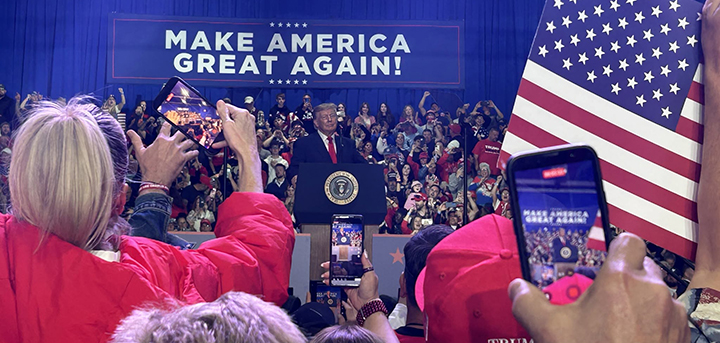
This Independence Day, however, I sat alone and scrolled through social media. Numerous partisan pieces flooded my feed. Each article claimed I should hate or love a side of the political aisle. Clickbait headlines screamed for clicks as I scrolled by. Eventually, the algorithm sent me an NPR/PBS News/Marist poll stating, “More than one in ten Americans (12%) strongly agree that Americans may need to resort to violence to get the nation back on track. An additional 25% of residents nationally agree with that assertion.”
This stopped my self-induced doomscroll long enough for me to think about what I read: a third of us are considering violence to “get the country back on track.”
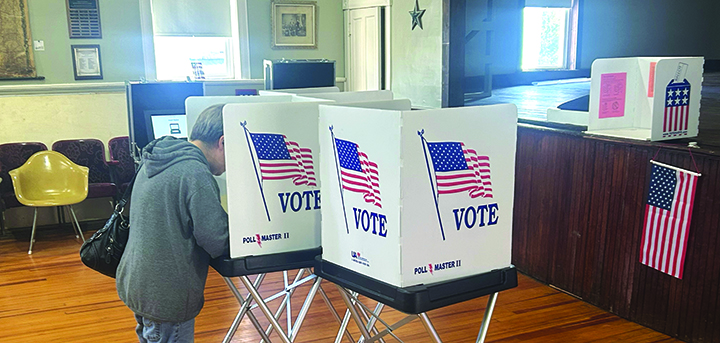
Why do we treat governance like a sport? We root for the home team when we should choose leaders like we’re making an expensive purchase. We stumble into the voting booth and gamble on our favorite color like it’s a game of roulette.
This political climate reminds me of a remarkably relevant warning from our first president, George Washington. In the final version of Washington’s Farewell Address, which was influenced by James Madison and Alexander Hamilton, he warned that we must be wary of party politics and division.
He describes a familiar and vicious cycle that costs nations their cohesion and identity: “The alternate domination of one faction over another, sharpened by the spirit of revenge, natural to party dissension, which in different ages and countries has perpetrated the most horrid enormities, is itself a frightful despotism.”
He knew people were inclined to give up their rights to tyrants when times got tough: “The disorders and miseries which result gradually incline the minds of men to seek security and repose in the absolute power of an individual; and sooner or later the chief of some prevailing faction, more able or more fortunate than his competitors, turns this disposition to the purposes of his own elevation, on the ruins of public liberty.”
Washington wrote that the spirit of the political party “agitates the community with ill-founded jealousies and false alarms, kindles the animosity of one part against another, foments occasionally riot and insurrection. It opens the door to foreign influence and corruption, which finds a facilitated access to the government itself through the channels of party passions.”
I think Washington said all of that because he wanted to protect the soft bonds that hold our country together. Perhaps he hoped, if nothing else, his parting words could help his fledgling nation survive.
I’ll leave you with this final thought:
More than 160 years ago, the social fabric of our country was being torn between the North and South, and Abraham Lincoln pleaded for the nation to avoid civil war. He said, “We are not enemies, but friends. We must not be enemies. Though passion may have strained, it must not break our bonds of affection.”
His words were beautiful, but they were too late. We dehumanized each other beyond the point of no return. We chose violence, and in the resulting war, hundreds of thousands of Americans died.
Now a third of our people think violence may be the solution once again. Even so, our country is counting on us to keep it together.
(This editorial reflects the opinion of the author.)



Comments